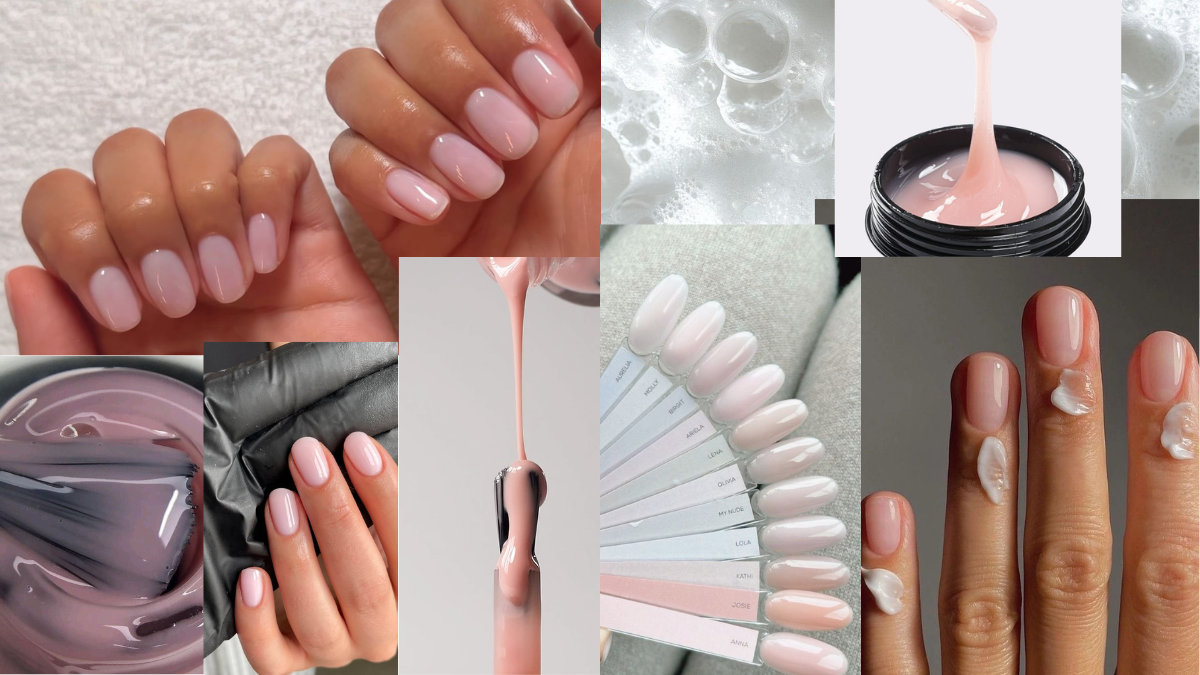
What Is BIAB? The Builder Gel Manicure That Finally Grew My Nails
I’ll be honest: my first BIAB appointment was a let-down. The nails were thick, a bit clumpy at the edges and nothing like the glossy, natural-looking sets all over my feed. I nearly wrote the whole thing off.
Then I found a salon that actually knew what it was doing, and everything changed. My nails grew longer than they ever have, stopped snapping and felt far stronger than they ever did under shellac. If you’ve been wondering what BIAB actually is, how long it lasts and whether it’s really kinder to your nails, here’s everything I’ve learned, the good set and the bad one.
What is BIAB nails?
BIAB stands for Builder In A Bottle. It’s a soak-off builder gel, also called builder gel (the name you’ll hear most in the US), that’s brushed onto your natural nail to add a thin, strengthening layer. Strictly speaking, BIAB is a brand name from the UK company The GelBottle Inc, but most salons now use “BIAB” for any builder gel manicure.
Think of it as sitting between gel polish and acrylics. It’s thicker and more structured than shellac, so it protects the nail and stops it bending and snapping. But it’s more flexible than acrylic, applied straight onto your own nails rather than over tips, and cured under a UV or LED lamp like a normal gel.
Not sure which treatment is right for you? We’ve broken down BIAB vs gel vs acrylic nails, from how long they last to which is best for your natural nails.
A few things set it apart:
- It strengthens rather than extends. BIAB is mainly used as an overlay on your own nails. A tech can add a little length, but most people use it to grow their own.
- It comes in sheer, nude and full colours. You can wear it on its own or add gel colour or nail art on top.
- It’s infilled, not removed every time. Instead of taking everything off at each appointment, your tech files back the old layer and fills in the regrowth (more on that below).
How long does BIAB last?
A well-done set of BIAB nails lasts around three to four weeks, and some formulas are made to wear for up to five. In practice it isn’t the gel that gives up first: it’s your nails growing out. By week three you’ll notice a gap at the cuticle, and that’s usually when it’s time to go back.
How long yours lasts depends on a few things:
- The prep. Most lifting and chipping comes down to how well the nail was cleaned and prepped, not the product.
- Your hands. Lots of washing up, cleaning products or typing with your nails will shorten the wear.
- Length. Longer nails take more knocks, so they’re more likely to crack at the tip.
What is a BIAB infill?
A BIAB infill is the maintenance appointment. Instead of soaking everything off, your nail tech files the existing gel down to a thin base layer, then rebuilds the shape and fills in the new growth at the cuticle. You can change your colour at the same time.
Most people book an infill every three to four weeks. This is a big part of why BIAB is gentler than other enhancements: your natural nail isn’t stripped back to bare every few weeks, so it gets the chance to grow out underneath a protective layer.
Is BIAB good for your nails? Is BIAB bad for your nails?
Well, the truth is that nothing you put on your nails is good for them. Filing, gels, lamps and removal all take a small toll, and the healthiest nail is technically a bare one. But you can take good care of them, and of all the options out there, BIAB is the best and the least aggressive. Here’s why.
- Your nail gets a protective layer. The builder gel acts like a shield, so weak, bendy or peeling nails are less likely to split or snap while they grow.
- Less removal means less damage. With infills, you’re not soaking off and buffing the nail back every couple of weeks the way you often are with shellac.
- No heavy filing of the natural nail. A good tech only lightly buffs the surface for grip, unlike some acrylic techniques.
- It’s flexible. Because it bends a little with your nail, it’s less likely to lever the nail up or tear it when you knock it.
The catches worth knowing
- Bad removal undoes everything. Peeling or picking BIAB off can take layers of your natural nail with it. Professional removal is usually the safest option, but if you’re planning to do it yourself, read our guide on how to remove BIAB nails at home before you start.
- Over-filing is the real enemy. A heavy-handed tech can thin your nails. If your nails feel sore or hot after an appointment, that’s a red flag.
- Allergies are possible. Gel products contain acrylates such as HEMA, which some people become sensitive to over time, especially when gel touches the skin. Watch for itching, redness or swelling around the nail, and ask your salon about HEMA-free formulas if you’re sensitive.
- UV exposure. Curing lamps use UV light. Many people apply SPF to their hands or wear fingerless gloves during curing as a precaution.
So, is BIAB healthy? It’s not a treatment, but done well and removed properly, it’s one of the kindest ways to wear long-lasting nails.
My BIAB experience: why the salon matters more than the product
My first set was, frankly, not it. The gel was laid on so thick my nails looked chunky and fake, the shape was uneven and they felt heavy on my fingers. I didn’t love them, and I couldn’t see what all the fuss was about.
What I didn’t know then is that BIAB lives or dies on the technician. The product is meant to be applied in thin, controlled layers that self-level into a smooth curve, not slapped on to hide uneven prep.
So I tried again with a salon that came properly recommended, and the difference was night and day. The set looked like my own nails, just better: thin, glossy and naturally shaped. And over the next few months, my nails grew more than they ever had.
Compared with shellac, there was no contest. With shellac, my nails would still bend and break underneath, and every removal left them thinner. With BIAB, they felt strong and stopped snapping, and with regular infills I could finally keep some length.
If your first set disappointed you, don’t give up on BIAB. Give up on that salon.
Natural BIAB nails
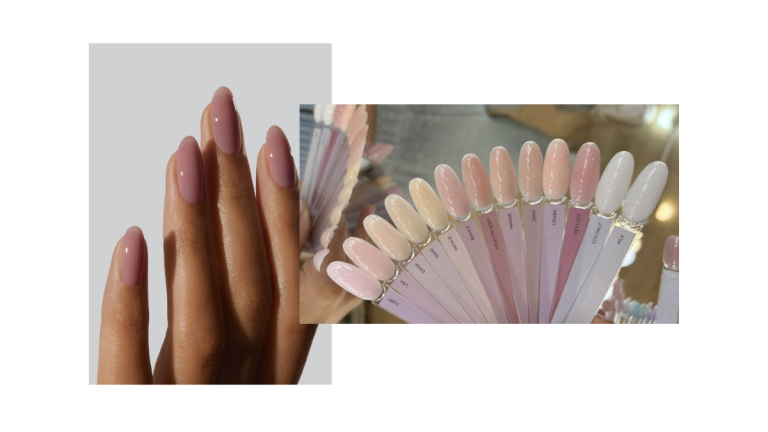
Natural BIAB nails are where builder gel really shines. A clear, milky or sheer nude shade over your own short-to-medium nails gives that “my nails, but better” look: healthy-looking, glossy and easy to wear with anything.
A few shades and styles to ask for:
- Sheer pink or milky nude for a clean, polished look that grows out discreetly.
- Clear BIAB if you just want strength and shine on your own nail colour.
- A soft micro French for a natural look with a little more definition.
The bonus? Sheer shades hide regrowth far better than bold colours, so you can stretch closer to four weeks between infills.
Before you book: what I wish I’d known
- Choose the tech, not the price. Look at their Instagram or reviews for thin, natural-looking sets, and ask if they’re trained in builder gel specifically.
- Ask for it thin. If you want a natural look, say so. You can always add strength; you can’t easily take bulk away.
- Never pick it off. If it lifts, book a repair or removal instead of peeling it.
- Keep up with infills. Leaving it too long puts pressure on the free edge and makes breaks more likely.
- Use cuticle oil daily. It keeps the gel flexible and the skin around your nails healthy.
The Veredict
BIAB isn’t magic, and no manicure is truly good for your nails. But after one bad set and one brilliant salon, I’m a convert. My nails are longer and stronger than they ever were with shellac, and I’ve finally stopped losing them to every door handle. Find a good tech, ask for it thin, and give it a few rounds of infills before you decide!