How to Style a Blazer for Everyday Wear
Put the same blazer over a gray marl T-shirt, then over a silk camisole, and you’ll have two entirely different jackets. That’s the quiet trick of tailoring: it takes its cue from everything around it. With the right jeans, it reads as weekend. With a skirt that moves, it softens. Buttoned over very little, it’s ready for dinner.
Knowing how to style a blazer for everyday wear has less to do with the jacket itself than with balance: how its shoulders sit against the width of your trousers, how much of what’s underneath shows, and where sharp tailoring meets something more relaxed. The eight outfits below lean into that tension, from Saturday errands to a late reservation.
Borrowed Shoulders and Straight-Leg Denim
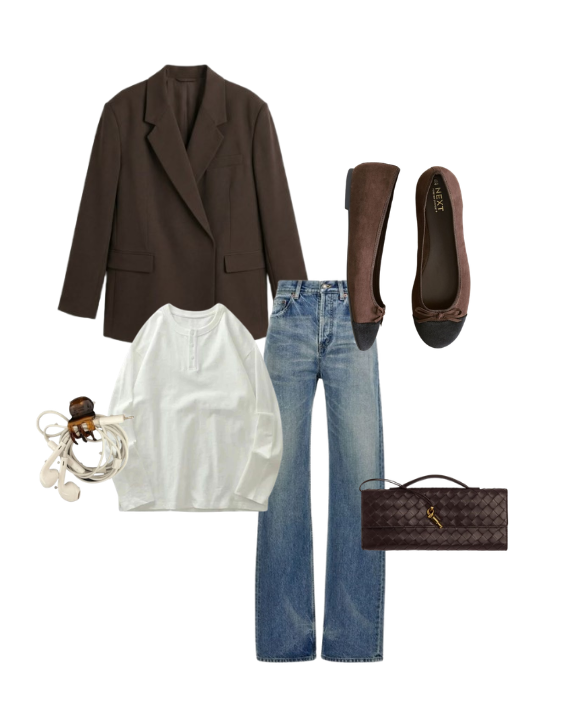
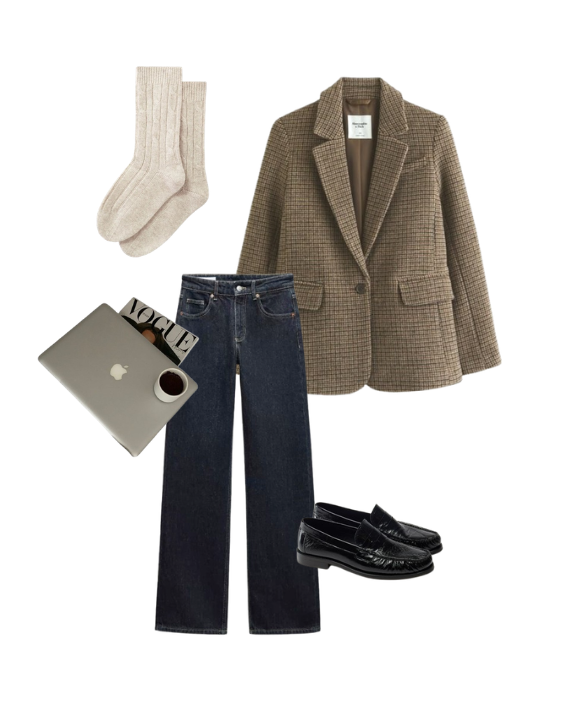
Start with the most forgiving combination: an oversized single-breasted blazer, a fitted ribbed tank or white T-shirt, and straight-leg jeans in a mid or vintage wash. The blazer should be deliberately roomy, with dropped shoulders and a hem at the hip or slightly below, while the top stays close to the body, so the outfit has one clear volume instead of two competing ones. Straight-leg jeans keep the line clean from hip to ankle; a hem that just grazes the shoe looks neater than a heavy stack. Charcoal, oatmeal and soft brown herringbone all sit well against blue denim. Finish with ballet flats or low leather sneakers, push the sleeves to the forearm, and wear it to the farmers’ market or a slow Saturday in the city.
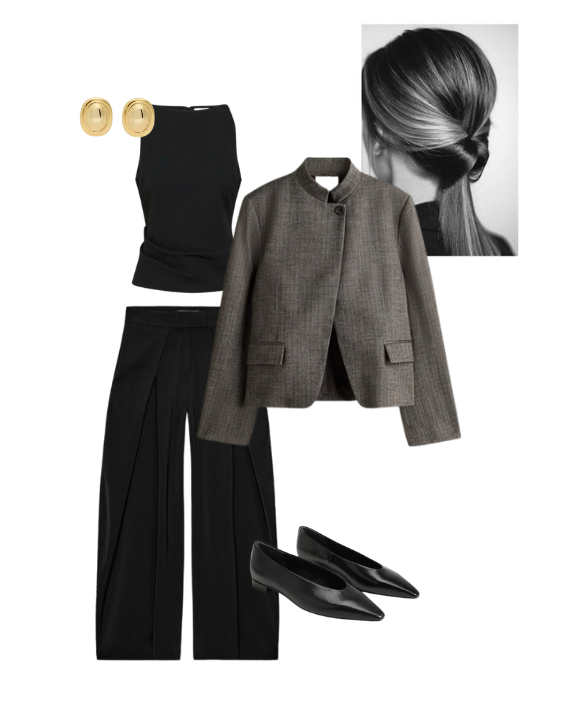
Soft Tailoring, Long Lines: The Blazer With Wide-Leg Trousers
For a relaxed take on workwear, pair a blazer with wide-leg trousers in a fluid fabric: wool crepe, drapey twill or a linen blend for warmer days. It’s one of the easiest smart-casual formulas to repeat through the week, polished without feeling stiff. Choose a relaxed blazer that ends at the hip; anything much longer can swallow the leg line. A fine-gauge knit or a tucked-in silk shell keeps the waist visible and anchors the proportions, while tonal dressing, such as camel on cream or gray on gray, lengthens the whole silhouette. A pointed flat or heeled boot keeps the hem from dragging; our guide to “What Shoes to Wear With Wide-Leg Pants: The Pairings That Actually Work” breaks down the options. Finish with a structured leather tote and understated jewelry to keep the look polished enough for the office without making it feel overly formal.
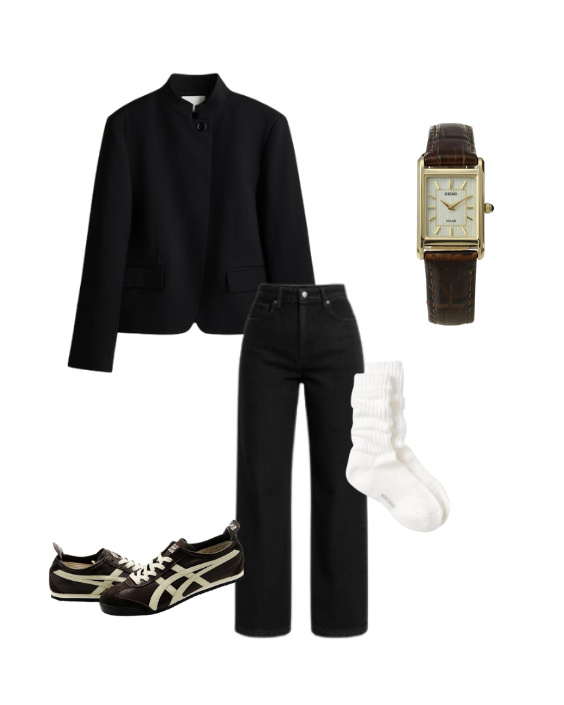
A White Tee, Clean Sneakers and a Little Structure
Here the blazer does the dressing up so nothing else has to. Choose a classic single-breasted cut in navy or black with a slightly boxy shape, and wear it over a heavyweight white or gray T-shirt; thicker cotton holds its shape at the neckline and won’t look flimsy under tailoring. Black straight-leg jeans cropped right at the ankle reveal a sliver of white sock and clean leather sneakers. That short hem matters, because it lets the shoe sit visibly and makes the outfit look intentional rather than half-finished. Keep jewelry to a watch or small studs, add a nylon crossbody, and this is your outfit for errands, a matinee or a day working from a café.
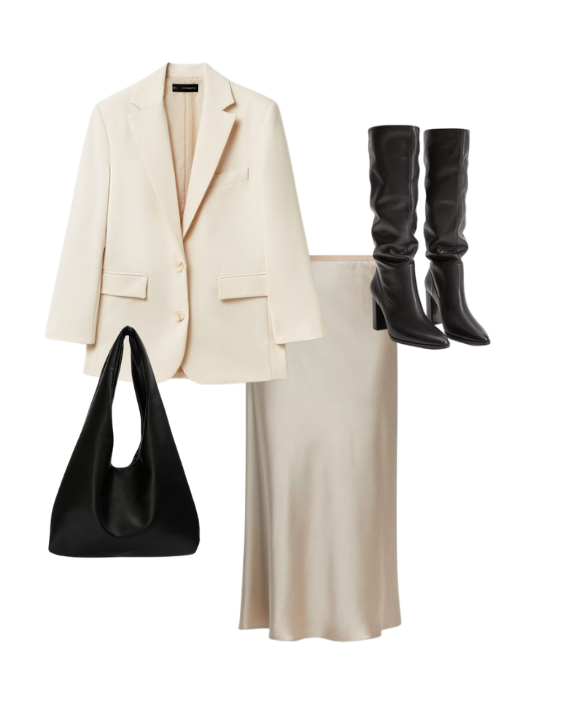
Sharp Shoulders, Liquid Satin
Tailoring and satin pull in opposite directions, which is exactly why they work together. Pair a bias-cut slip skirt in champagne, chocolate or deep olive with a fitted or lightly structured blazer that ends at the high hip; a long, oversized jacket can bury the skirt’s movement. Underneath, a fine merino crewneck or cotton tank stops the satin from feeling like eveningwear. A midi length is the most versatile, working with knee-high boots in fall and slingback flats once the weather warms. Wear the blazer open so the skirt’s sheen shows, and carry a soft leather shoulder bag. It suits a gallery afternoon, a long lunch or a creative office with a relaxed dress code.
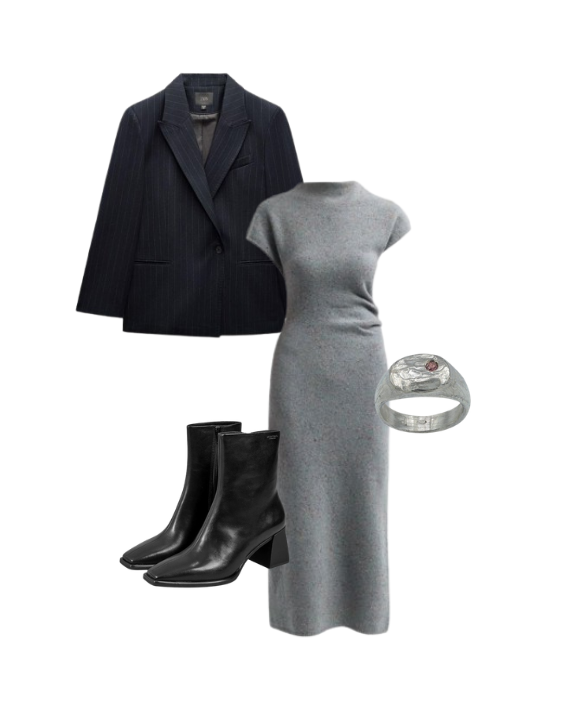
The Knit Dress, Now With Shoulders
A blazer is the quickest way to carry a dress into cooler months. A knit midi dress in a solid shade, such as charcoal, oatmeal or black, has enough body to stand up to tailoring. Layer an oversized blazer in a contrasting tone and leave it unbuttoned so the dress’s column shape runs uninterrupted. The proportions follow the dress: a close-fitting knit can take a roomier jacket, while a fuller, tiered cotton dress looks better with a shorter, fitted blazer that doesn’t add bulk. Lug-sole ankle boots give the softness some weight. Draping the jacket over your shoulders looks lovely in photos, but wear it properly on through the arms if you’re actually going somewhere. It works for brunch, a work event or an unpredictable weather day.
Loafers, Cropped Trousers and a Properly Fitted Blazer
If your office calls for smart casual, this is the formula to reach for. A fitted single-breasted blazer with defined shoulders, in gray, navy or a muted check, pairs with straight trousers cropped just above the ankle. That shorter hem is what makes loafers look deliberate, leaving a flash of ankle or fine sock between trouser and shoe. Tuck in a crisp poplin shirt with the collar open, or switch to a striped tee on Fridays. Classic penny loafers keep the look clean; chunkier lug-sole pairs add weight that suits slightly wider trousers. Of all smart casual outfits for women, few adapt this easily from a client meeting to lunch. For more ways to wear them, explore our guide to “How To Style Loafers”.
After Dark: The Blazer Worn as the Top
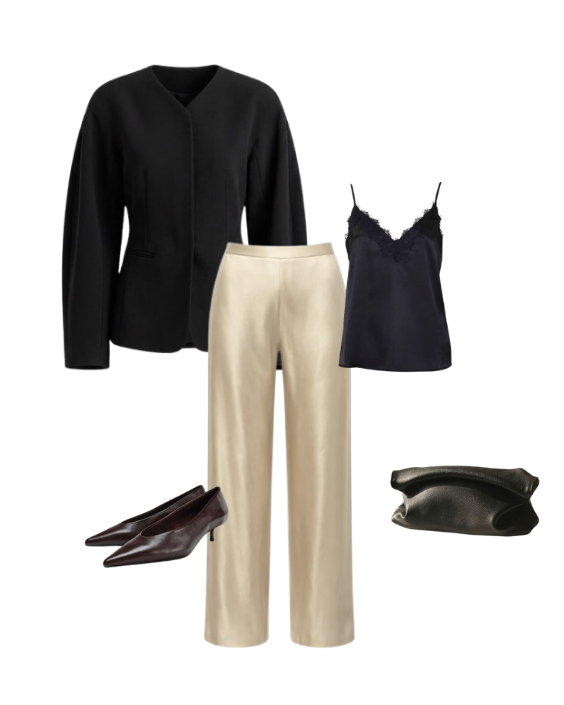
For dinner or drinks, let the blazer stand on its own. A black double-breasted or sharply cut single-breasted jacket, buttoned over a lace-trimmed camisole, or very little else, becomes the centerpiece. Choose a structured fit in a fabric with some polish, like wool crepe, or velvet when the evenings get colder. Satin straight-leg trousers or slim tailored pants keep the line long and add a touch of shine without competing. Finish with pointed slingbacks or strappy sandals, a single bold earring or cuff, and a small clutch. One practical check: if the front gapes when buttoned, the jacket is too small for this styling, so wear a camisole underneath or choose the next size up.
The Navy Blazer, Played Straight
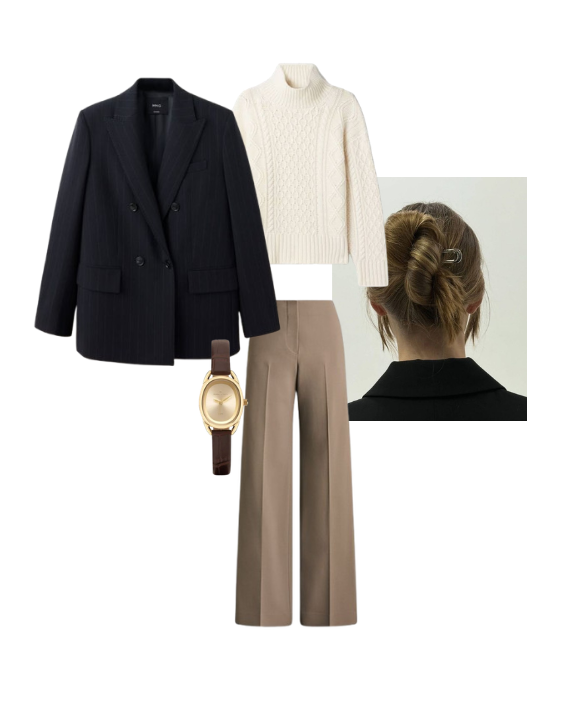
Some outfits work precisely because they don’t try to be new. A navy single-breasted blazer with natural shoulders, worn over a cream cable-knit with an oxford collar showing, and straight camel trousers, is classic tailoring in its most understated form. It’s often filed under the “old money” aesthetic, but really it’s traditional dressing done carefully. Fabric does most of the work here: wool flannel, cashmere blends, cotton twill. Keep the palette to navy, cream and camel, and the accessories restrained, such as a leather-strap watch, small gold earrings and a plain belt. Polished flat ankle boots keep it grounded. Wear it to a weekend lunch, a family gathering or a trip out of town.
How to Choose the Right Blazer Fit
Start with the shoulders, since they’re the hardest part to alter. On a fitted blazer, the seam should sit at the edge of your natural shoulder, with lapels lying flat. An oversized blazer is cut with a dropped seam on purpose, but it should still hang straight and clean from the shoulder.
That’s the difference between oversized and ill-fitting. A jacket designed to be roomy has its proportions scaled up together: longer body, wider lapels, sleeves meant to be pushed up. A fitted blazer that’s simply too big shows drooping shoulder pads, collapsing lapels and sleeves swallowing your hands.
Length shapes the whole outfit. Cropped and waist-length jackets pair well with high-waisted wide-leg trousers and fuller skirts. Hip-length is the most versatile, and longer cuts sit best over slimmer or straight silhouettes.
Single-breasted blazers are easier to wear open and lean more casual. Double-breasted styles look sharpest buttoned, since the extra fabric can flap when left open. As a general guide, pair one roomy piece with one closer-fitting piece, or keep both relaxed if the fabrics drape well.
How to Make a Blazer Look Casual
The fastest change happens underneath. Swap the shirt for a T-shirt, a fine knit or even a thin sweatshirt, and the jacket instantly feels less like officewear.
Denim is the next shortcut. Tailoring against jeans of almost any cut immediately lowers the formality, especially in washed or faded blues.
Fabric matters more than color. Unstructured blazers in linen, cotton or washed wool, with soft or no shoulder padding, relax far more easily than crisp suiting fabric. If you own a suit, break it up: wear the jacket alone with jeans and the trousers with a sweater.
Then adjust the details. Wear the blazer open, push the sleeves up, and choose sneakers, ballet flats or simple sandals over heels. Keep accessories understated, such as a canvas tote, a crossbody or one piece of jewelry, and save polished leather bags and statement heels for occasions that call for them.
The Last Word
Before you get dressed, decide which piece leads. If the blazer is sharp and structured, let everything else relax. If the skirt or trousers carry the drama, choose softer tailoring. One structured element balanced by one easy one is most of what you need to know about how to style a blazer.