8 Classic Books That Will Make You Fall in Love With Reading
Somewhere along the way, the classics acquired a reputation problem. They became the books we were assigned rather than the ones we chose: dense, dutiful spines read with a highlighter in hand and an essay question hanging overhead. It is an unfair image, and a misleading one. Long before they were set texts, several of these novels were the most talked-about entertainment of their day — published in instalments, devoured by readers desperate to know what happened next, argued over at dinner.
The eight books below were chosen with that appetite in mind. Between them you’ll find a revenge plot of almost absurd ambition, a murder told backwards, a governess in a house full of noises she can’t explain, and a love affair that begins with a single painting. Some are slim enough for a weekend; others will keep you company for a season. All of them are, first and foremost, a pleasure.
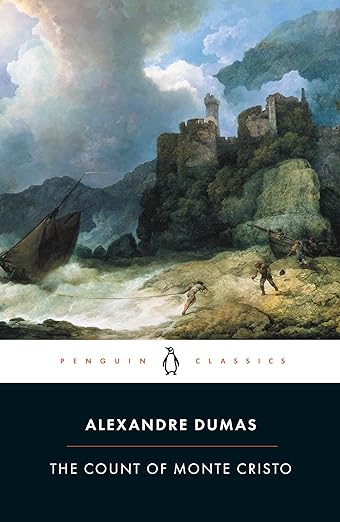
The Count of Monte Cristo — Alexandre Dumas
The original long game.
Edmond Dantès is nineteen, about to be made captain of his ship and engaged to a woman he adores. Then, at his own betrothal feast, he is arrested on a false accusation and locked away in the Château d’If, an island fortress off Marseille, with no idea who put him there or why. What follows is one of the great engines of storytelling: years of patience, a vast fortune, a series of new identities and a revenge so carefully engineered that you find yourself admiring it even as it starts to unsettle you.
There is no getting around the size. The unabridged text runs to well over a thousand pages, and abridged editions tend to cut exactly the scheming that makes it so satisfying. But Dumas wrote it as a newspaper serial in the 1840s, and you can feel it: chapters end on revelations, threads laid down hundreds of pages earlier snap tight, and the cast of bankers, smugglers, aristocrats and poisoners keeps widening. Read it a few chapters a night, the way you’d follow a long-running drama, and let the connections reveal themselves.
Read it if you love: elaborate revenge, long cons and twists you didn’t see coming.
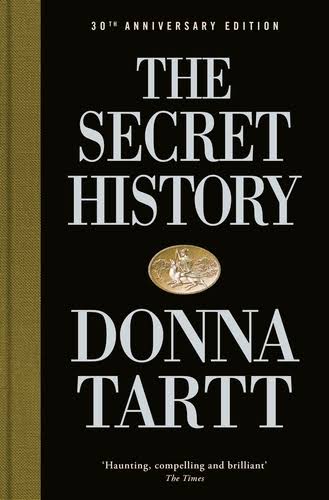
The Secret History — Donna Tartt
A murder story where the question is never who, only why.
Strictly speaking, this one is a modern novel rather than a classic in the nineteenth-century sense — Tartt’s debut was published in 1992 — but it has earned its place on the shelf, and it sits comfortably beside older books, not least because its characters are so obsessed with them. Richard Papen, a scholarship student from California, arrives at a small, expensive college in Vermont and talks his way into a closed circle of five students who study ancient Greek with a charismatic professor. They are clever, glamorous, careless with money and faintly unreal. Within the first page, Richard tells you that a death has occurred and that he was part of it.
What Tartt does with that admission is the hook: you know roughly where this is going, and the dread of watching it get there is almost unbearable. At around 600 pages it takes its time, lingering over long dinners, hangovers and Vermont snow. But that slowness is the point. The atmosphere becomes so complete that the book more or less wrote the rules for what the internet now calls dark academia.
If it’s the psychological suspense that draws you in, our selection of “If You Loved The Housemaid, These Are the Books to Read Next” offers more stories built around secrets, unreliable perspectives and the feeling that something isn’t quite right.
Read it if you love: dark academia, psychological suspense and friendships with something rotten at the centre.
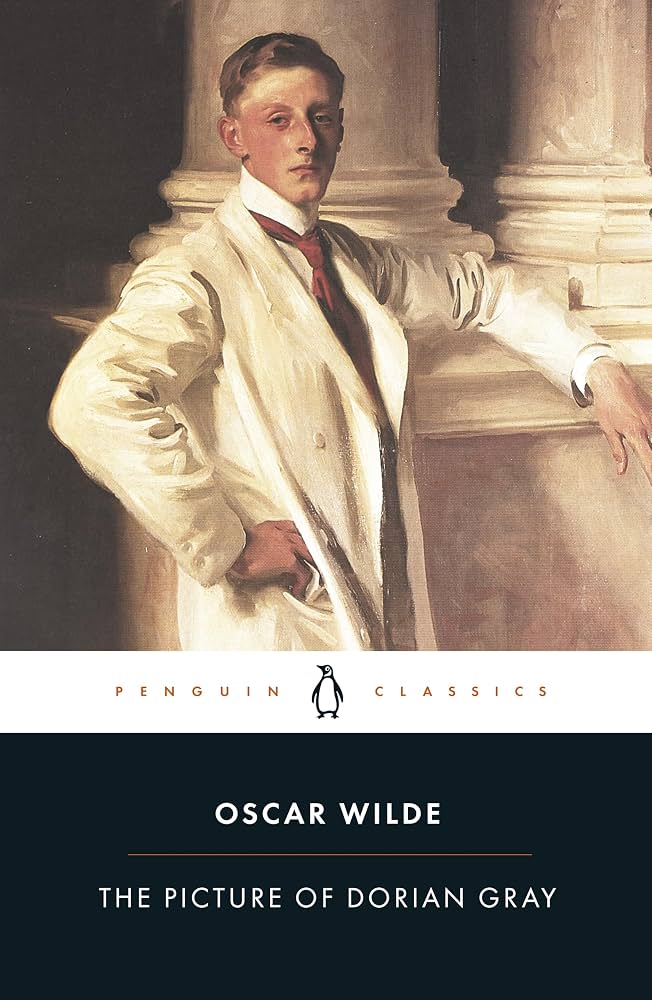
The Picture of Dorian Gray — Oscar Wilde
Vanity, with consequences.
Dorian Gray is young, beautiful and, when we first meet him, curiously innocent. As the painter Basil Hallward finishes his portrait, Dorian makes a careless wish: that the picture might grow old while he stays exactly as he is. Under the influence of Lord Henry Wotton, a man who says outrageous things beautifully and does very little himself, Dorian begins to find out what that wish might cost.
Wilde’s only novel runs to roughly 250 pages, and much of it reads like the best dinner-party conversation you’ve ever overheard. Underneath the one-liners, though, is something properly unnerving. The story moves from sunlit studios to opium dens and a locked room at the top of a house, and its preoccupation with surfaces — with image, with youth, with never being seen to age — has not dated in the slightest. If stamina is what has kept you away from the classics, start here. You can read it in a weekend; it will stay with you rather longer.
Read it if you love: gothic atmosphere, moral unease and very good lines.
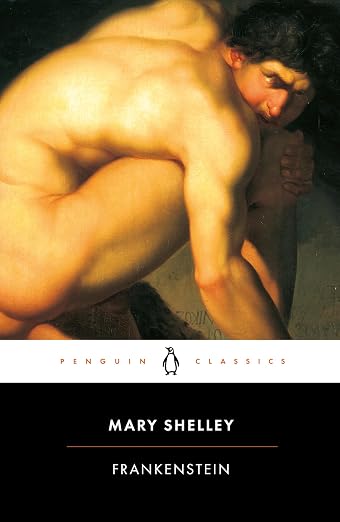
Frankenstein — Mary Shelley
Forget the bolts in the neck.
Most of us think we know this story: a mad scientist, a thunderstorm, a lumbering green monster. Very little of that is in the book. Mary Shelley began writing it at eighteen, during a rain-soaked summer by Lake Geneva when Lord Byron challenged his guests to write a ghost story, and it was first published anonymously in 1818. Victor Frankenstein, a gifted young student, becomes consumed by the ambition to create life — and then cannot bear to look at what he has made.
The creature, who is never given a name, turns out to be the novel’s most eloquent voice. He learns to speak and to read, and his story raises the question that hangs over everything else: what do we owe the things we bring into the world? The prose is formal and occasionally overwrought, and the story arrives through letters and narratives nested inside one another, which takes a few chapters to settle into. Once it does, it is gripping, desolate and far sadder than its reputation suggests. At around 200 pages, it is also one of the quicker reads here.
For more atmospheric reading as the evenings grow darker, explore our selection of “Books to Read This Autumn That Will Keep You Awake”.
Read it if you love: philosophical horror, lonely outsiders and ambition that outruns conscience.
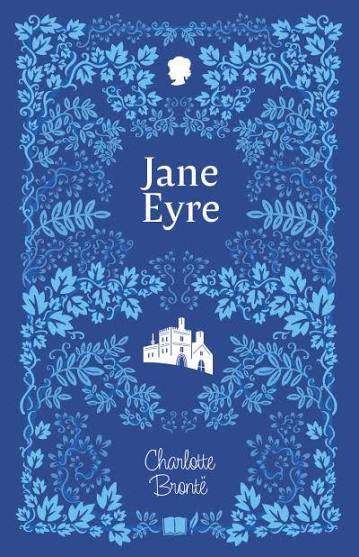
Jane Eyre — Charlotte Brontë
The narrator you would follow anywhere.
From the opening chapters, in which ten-year-old Jane is bullied by her cousin and shut in the room where her uncle died, you are entirely on her side. She is poor, plain by her own account, fiercely intelligent and incapable of pretending to feel what she doesn’t, and she tells her story with a directness that still feels startling. Brontë published the novel in 1847 under the name Currer Bell, and it was an immediate success.
After a harsh childhood at a charity school, Jane takes a post as governess at Thornfield Hall, a house of closed doors and strange sounds at night, whose owner, Mr Rochester, is abrupt, moody and unlike anyone she has met. Their conversations — sparring, testing, honest to the point of rudeness — crackle with tension. The novel is part gothic mystery, part romance and part a story about a woman insisting on her own worth, and it moves between those modes with real momentum. The language is of its time but rarely difficult; Jane’s voice carries you through.
Read it if you love: gothic houses, slow-burning romance and heroines who know exactly what they deserve.
Read it if you love: philosophical horror, lonely outsiders and ambition that outruns conscience.
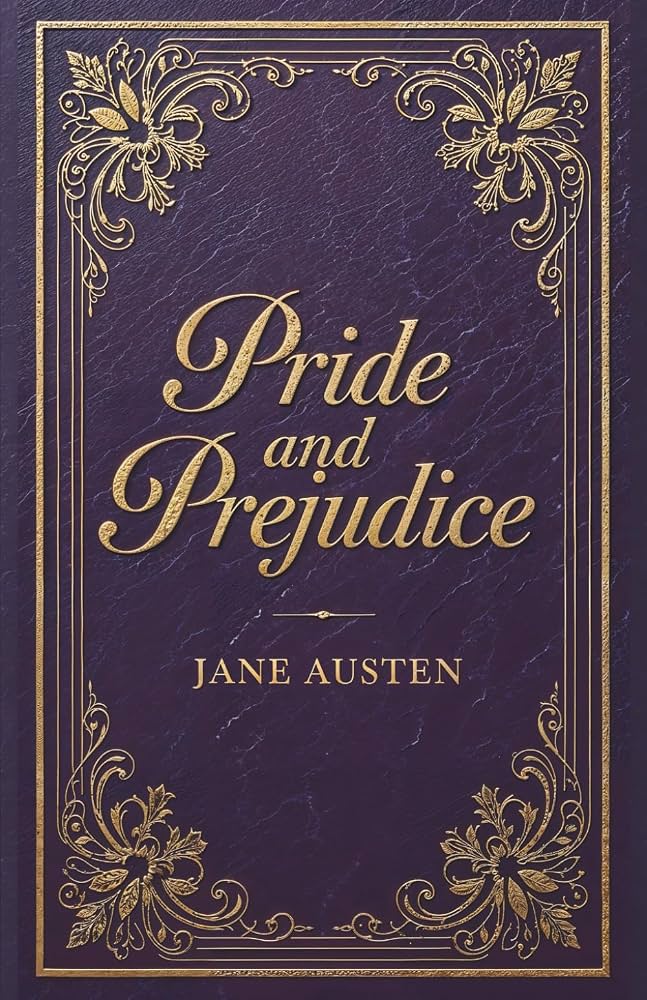
Pride and Prejudice — Jane Austen
Two proud people, one very long misunderstanding.
Five unmarried daughters, a family estate that will pass to a distant cousin, and a mother whose single ambition is to see the girls well settled: the setup is practical, almost financial. Then a wealthy young man takes the grand house nearby, bringing with him a friend who is richer, prouder and memorably rude at a local dance. Elizabeth Bennet decides, quickly and with considerable pleasure, exactly what she thinks of him.
What keeps readers coming back more than two centuries after its publication in 1813 is the dialogue. Austen is funny — sharply, sometimes cruelly funny — and her characters give themselves away in every exchange, from Mr Collins’s boundless self-regard to Mr Bennet’s dry asides from behind his newspaper. Beneath the comedy runs a clear-eyed story about first impressions, pride and the real stakes of marriage for women with no money of their own. The sentences take a chapter or two to tune into, but the book is compact and the romantic tension is managed with enormous skill. If you only know it from adaptations, the original is sharper than you’d expect.
Read it if you love: witty dialogue, romantic misunderstandings and a slow thaw between two stubborn people.
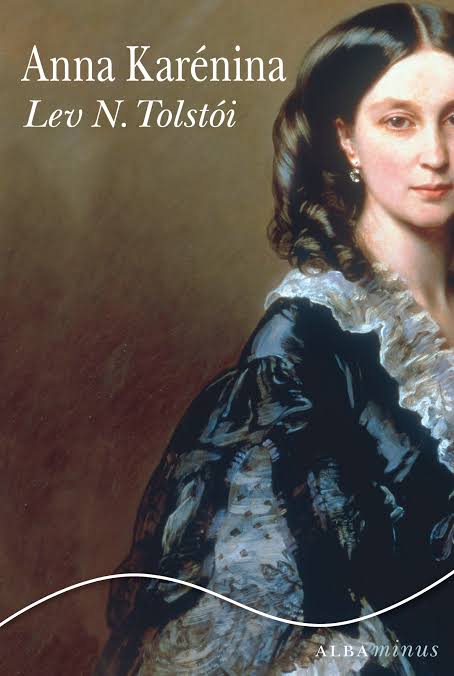
Anna Karenina — Leo Tolstoy
Every kind of love, at full length.
Anna Karenina is married to a senior government official, devoted to her young son and secure in St Petersburg society. On a trip to Moscow to patch up her brother’s marriage, she meets Count Vronsky, a charming cavalry officer, and the attraction between them is immediate and dangerous. Running alongside their story is another: that of Konstantin Levin, an awkward, earnest landowner who is in love with a young woman named Kitty and trying to work out how to live a decent life.
This is a long book, at around 850 pages, and Tolstoy takes detours into farming, politics and faith that some readers relish and others skim. But few novelists have written the inside of a relationship so precisely: the small jealousies, the misread glances, the moment a conversation turns cold. You come to know these people so well that their choices start to feel personal. It is less a novel to race through than one to live alongside for a few weeks. A recent translation, such as Rosamund Bartlett’s or Richard Pevear and Larissa Volokhonsky’s, keeps the prose fresh.
Read it if you love: complicated marriages, forbidden attraction and characters who feel uncomfortably real.
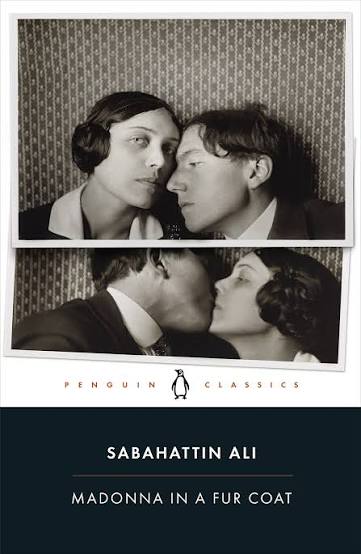
Madonna in a Fur Coat — Sabahattin Ali
The quietest book here, and perhaps the most affecting.
The narrator, out of work and short of money in Ankara, takes a job in an office where he notices a colleague everyone else overlooks: Raif Efendi, a meek translator who seems to drift through life wanting nothing at all. Then he comes across a notebook, and the story it tells — of Raif as a young man in 1920s Berlin, and of the day he stops in front of a woman’s self-portrait at an exhibition — reveals someone entirely different.
Published in Turkey in 1943, the novel became an unlikely bestseller there some seventy years later, and Maureen Freely and Alexander Dawe’s English translation brought it to a new audience in 2016. It is brief and simply told, with no grand events or elaborate plotting. What it has instead is an extraordinary intimacy: shyness, longing, the terror of being truly seen and the fear of never being seen at all. You can finish it in a couple of evenings, and you will think about Raif for a long time afterwards.
Read it if you love: quiet, aching love stories and people whose inner lives are far larger than they let on.
Finding your way in
There is no correct route into the classics, and certainly no required order. If you want plot, start with Dumas. If you want to be unsettled, try Wilde or Shelley. If you want something to live inside for weeks, Tolstoy or Tartt. If you want to fall a little in love, Brontë, Austen or Ali.
And if one doesn’t take, put it down and pick up another; a book that drags in March can be exactly right in November. The point was never to have read them. It is to find the one you think about on the way home, the one you stay up for, the one you press into a friend’s hands with instructions to just read the first chapter.